
The Retention Question Is No Longer Simple
One of the most misunderstood realities of organizational life is that talented employees do not leave only because a company is poorly run. Many leave organizations that are respected, profitable, ethical, well-branded, and reasonably generous in compensation. This makes attrition difficult for leaders to interpret. If the company is stable, the pay is fair, and the brand carries credibility, why would high-performing employees still choose to move on?
The answer lies in the changing nature of the employer-employee relationship. Talented professionals today evaluate organizations not only through salary, job security, or designation, but also through learning, managerial quality, autonomy, career mobility, psychological safety, and the credibility of leadership. The question is no longer simply, “Is this a good company?” Increasingly, employees ask, “Is this still the right place for me to grow?”
This shift has made retention a leadership issue, not merely an HR issue. A strong employer brand may attract talent, but it does not automatically retain it. Retention depends on what employees experience after they join: the manager they report to, the quality of work they receive, the fairness of opportunity, the pace of learning, and the trust they develop in the organization’s future.
The Common Misconception: Good Company Means Good Employee Experience
A common mistake is to assume that talented employees leave mainly for higher pay. Compensation matters, especially in competitive skill markets, but it is rarely the full explanation. In many cases, employees leave psychologically before they leave formally. They stop contributing ideas, reduce discretionary effort, become quieter in meetings, and begin to detach from work that once engaged them. The resignation letter is often the final step in a process that began much earlier.
Another misconception is that attrition reflects disloyalty. This view is too narrow. Talented employees often leave because they are serious about their own growth. If they sense that the organization cannot provide the next level of challenge, learning, recognition, or strategic exposure, they begin to evaluate alternatives.
Good companies lose good people when they confuse organizational reputation with lived employee experience. A respected brand can create pride, but it cannot compensate for a weak manager. Strong policies can create structure, but they cannot substitute for fairness. A good office, benefits, and compensation may help, but they do not remove the frustration of unclear growth paths, poor feedback, underutilization, or lack of trust.
In that sense, attrition is not only about employees leaving organizations. It is also about organizations failing to renew the psychological contract with their people.
A Management Lens: Engagement, Safety, and Human Capital
A useful academic lens comes from William Kahn’s foundational work on employee engagement. Kahn argued that people bring different degrees of themselves—physically, cognitively, and emotionally—into their work roles. Engagement depends on whether employees experience meaningfulness, safety, and availability.
Meaningfulness refers to whether employees feel their work matters. Safety refers to whether they can express themselves without fear of embarrassment, punishment, or political cost. Availability refers to whether they have the emotional and physical energy to perform well.
This framework explains why capable employees may leave even when the organization appears successful from the outside. A high performer may be well paid but still feel that the work has become repetitive. A company may speak about innovation but punish dissent. A manager may demand ownership but provide little autonomy. An organization may reward performance while ignoring burnout.
Human capital theory adds another perspective. Employees invest in their own education, skills, networks, and experience. They naturally seek environments where these investments appreciate rather than stagnate. If talented employees believe that staying in the same role will reduce their future employability, moving becomes a rational career decision.
Retention, therefore, is not about making people comfortable enough to stay. It is about making the organization a place where capable people continue to become more valuable.
Why This Issue Matters More Now
The question has become more urgent because skill cycles are shortening. The World Economic Forum’s Future of Jobs Report 2025 highlights how technological change, economic uncertainty, demographic shifts, geoeconomic fragmentation, and the green transition are reshaping work. In such an environment, employees are more alert to whether their current organization is preparing them for the future or only using their existing capabilities.
The Microsoft–LinkedIn Work Trend Index 2024 also reflects a workplace being reshaped by AI adoption, changing skill expectations, and new forms of knowledge work. Employees increasingly recognize that AI will not affect every job in the same way, but it will raise the premium on judgment, adaptability, analytical thinking, communication, and learning agility. If organizations do not create pathways for upskilling and internal growth, employees may look for employers that do.
In India, this issue has additional complexity. A young, ambitious, and mobile workforce is moving across sectors such as technology, BFSI, consulting, e-commerce, healthcare, consumer businesses, edtech, and global capability centres. Randstad India’s talent insights point to a market shaped by skill scarcity, regional opportunity clusters, compensation pressures, and evolving employee expectations. For many professionals, staying employable is becoming as important as staying employed.
This has implications for students as well as managers. For BBA students, the lesson is that a good company name is valuable, but the quality of role, manager, exposure, and learning matters equally. For MBA aspirants and working professionals, the lesson is more strategic: career decisions should be evaluated through learning velocity, leadership exposure, industry relevance, and long-term capability development—not only immediate salary.
When Employees Outgrow the Role Before the Organization Notices
High performers often master their roles faster than the organization expects. Once they reach that stage, they need broader problems, stretch assignments, cross-functional exposure, or a clearer path to the next level. If the organization continues to treat them only as reliable executors, frustration begins to build.
The irony is that good performance can become a cage. Because the employee is dependable in the current role, the manager may hesitate to move them. The organization protects short-term continuity but risks losing long-term capability.
This is a common retention failure. Leaders often notice underperformance quickly, but they do not always notice under-challenge. A talented employee who is bored, underused, or trapped in repetitive work may remain polite and productive for some time. But internally, they may already be preparing to leave.
The Manager Is Often the Real Workplace
People may join companies, but their daily experience is shaped by managers. A weak manager can dilute the value of a strong organization. Micromanagement, unclear expectations, inconsistent feedback, favouritism, poor listening, and lack of recognition gradually erode commitment.
This is why manager quality is central to retention. A capable employee who feels unseen or poorly led will eventually question whether the organization deserves their best effort. This does not always happen through confrontation. More often, it appears quietly: fewer ideas, lower initiative, reduced trust, and a growing emotional distance from the team.
For managers, this is an uncomfortable but important truth. Retention is not built only through annual increments, formal policies, or HR interventions. It is built through everyday leadership behaviour: the quality of feedback, the fairness of opportunity, the clarity of expectations, and the seriousness with which employee aspirations are heard.
Growth Paths Must Be Credible, Not Decorative
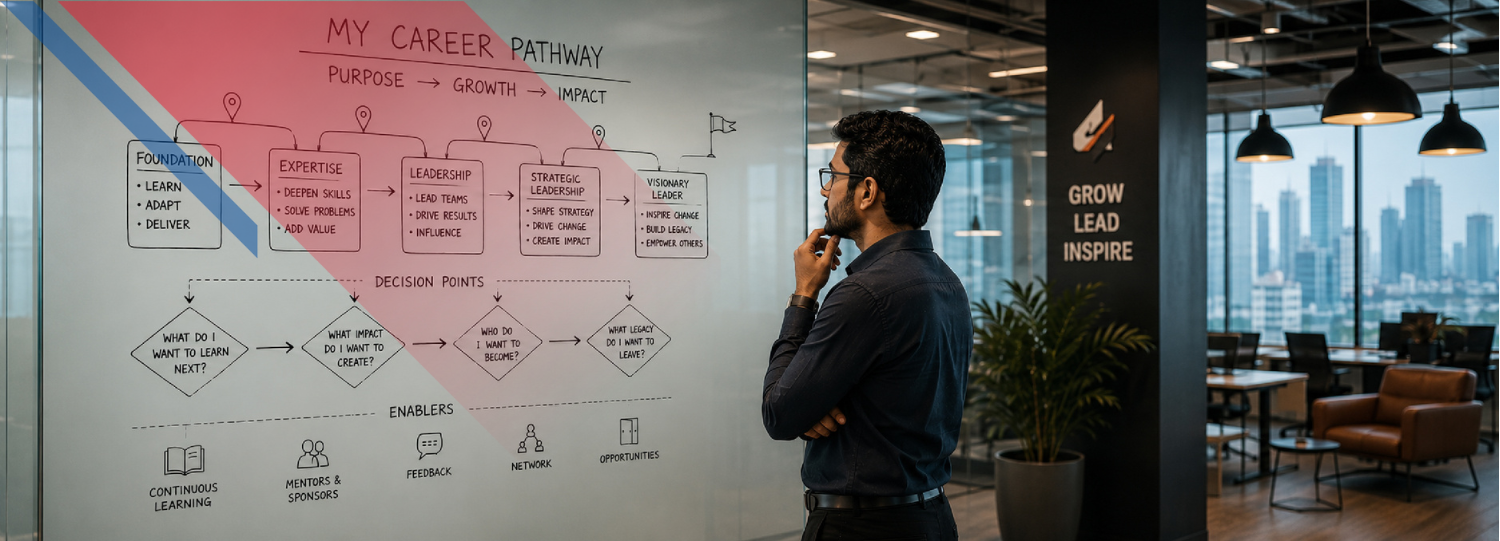
Talented employees do not expect promotion every few months. But they do expect clarity. They want to know what excellence looks like, what skills they must build, how decisions are made, and what opportunities may open if they perform well.
When promotion systems are opaque or perceived as political, employees begin to disengage. When internal mobility depends only on informal networks or managerial discretion, employees may conclude that the organization is not serious about their growth. At that point, the external market begins to look more rational than the internal system.
LinkedIn Learning’s workplace learning research has consistently emphasized the importance of career development and skill-building. Employees are more likely to stay where they can see a future. Without visible pathways, retention becomes dependent on goodwill—and goodwill has limits.
Organizations often invest heavily in hiring talent, but less consistently in developing and redeploying it. This creates a structural contradiction. The company wants loyalty, but the employee needs evidence that staying will lead somewhere.
Trust Declines When Stated Culture and Real Culture Differ
Employees can tolerate difficult periods if they trust leadership. They can accept restructuring, cost pressure, strategic pivots, or demanding business cycles when communication is honest and decisions appear fair. What damages trust is inconsistency between what leaders say and what the organization rewards.
Culture is not built by slogans. It is built by repeated signals. Who gets promoted? Who gets heard? Which behaviours are ignored? What compromises are tolerated? Are high performers protected even when they behave poorly? Are dissenting voices respected or punished? Are values applied consistently or only when convenient?
Talented employees observe these signals carefully. When they conclude that the real culture differs from the stated culture, they begin to detach. The issue is not cynicism; it is pattern recognition. Capable people often leave not because one incident disappointed them, but because repeated signals taught them that the organization was unlikely to change.
Underutilization Is a Silent Reason for Attrition
Talented employees want to solve meaningful problems. If they are repeatedly assigned routine tasks while more strategic work is reserved for a narrow circle, they may feel wasted. Underutilization does not always appear as visible dissatisfaction. Often, it appears as compliance.
This is especially relevant in knowledge work. Employees with analytical, creative, digital, or managerial capability expect to contribute beyond execution. If an organization treats them only as task-completers, it may lose them to a place that treats them as problem-solvers.
For leaders, the question is not only whether employees are busy. It is whether their capabilities are being used well. A high workload does not necessarily mean high engagement. People may be overloaded and underutilized at the same time—busy with tasks that do not develop them, challenge them, or allow them to create meaningful value.
Burnout Changes the Employee’s Relationship With Work
High performers are often rewarded with more work. Because they are dependable, they become the default choice for urgent tasks, difficult clients, broken processes, and last-minute escalations. Over time, this creates a hidden burden.
Burnout is not simply tiredness. It is the erosion of energy, motivation, and control. When organizations celebrate resilience without redesigning workload, they risk losing precisely those employees who carry the system.
This is where good companies can make serious mistakes. They may assume that strong employees can handle pressure indefinitely. But capability is not the same as unlimited capacity. If recovery, prioritization, staffing, and role clarity are ignored, employees eventually protect themselves by leaving.
Sometimes the Fit Has Simply Changed
Not all attrition is failure. Sometimes employees leave because their aspirations have changed. They may want a different industry, a global role, a start-up environment, a slower pace, a more analytical profile, or greater autonomy. In such cases, departure may be a sign of evolving fit rather than organizational weakness.
Mature organizations understand that some attrition is natural. The goal is not zero attrition. The goal is healthy retention of people whose aspirations, capabilities, and values align with the organization’s future.
This distinction matters. Leaders should not treat every resignation as betrayal, nor should they dismiss every exit as inevitable. The more important question is whether the organization is losing people it should have been able to retain—and whether the reasons were visible before the resignation arrived.
What Real Organizations Teach Us
Different sectors reveal different retention patterns. Large technology companies may offer brand value, compensation, learning resources, and global exposure, yet still lose employees who seek faster growth, entrepreneurial autonomy, or stronger product ownership. Consulting firms attract ambitious professionals through learning intensity and client exposure, but they also face exits when employees reassess lifestyle, burnout, specialization, or long-term identity.
Start-ups show the opposite pattern. They may offer autonomy, speed, and ownership, but not always structure, mentoring, role clarity, or managerial maturity. Talented employees may leave when the excitement of growth is not matched by leadership discipline.
These examples show why retention cannot be reduced to one variable. Employees stay when there is a meaningful fit between personal aspiration, role design, leadership quality, organizational values, and future opportunity.
Practical Implications for Managers and Leaders
For managers, the first implication is to have growth conversations before employees become flight risks. These conversations should not wait for appraisal cycles or resignation signals. Managers should ask what capabilities employees want to build, where they feel underused, what kind of work energizes them, and what support they need for the next stage of growth.
Second, managers must distinguish between performance management and development. Performance management asks, “Did you achieve the target?” Development asks, “What are you becoming capable of doing next?” Talented employees need both.
Third, organizations need stronger internal talent markets. If employees cannot move within the organization, they will eventually move outside it. Internal mobility should not depend only on informal access, personal advocacy, or managerial permission. It should be designed as a strategic retention mechanism.
Fourth, organizations must take manager development seriously. Many companies promote strong individual contributors into managerial roles without preparing them to lead people. This is costly. Poor managers create disengagement, attrition, reputational damage, and lost productivity.
Finally, leaders must understand that flexibility is not only about location. It is also about autonomy, decision rights, workload design, and trust. Talented employees value control over how they contribute, not merely where they sit.
What Students and Working Professionals Should Learn
For BBA students, this topic is a reminder that career choices should be made with maturity. A good company name matters, but the quality of the role, manager, learning, and exposure matters just as much. Early career decisions should build capability, not only resume value.
For MBA aspirants and working professionals, the lesson is to evaluate employment through a strategic lens. Before leaving a company, it is worth asking whether the problem is temporary frustration or structural misalignment. Have you communicated your aspirations? Have you sought stretch assignments? Have you built the skills required for the next role? Leaving can be wise, but it should be a considered decision, not only an emotional reaction.
For first-time managers, the lesson is sharper. Retention begins in everyday behaviour: listening carefully, giving timely feedback, explaining decisions, acknowledging contribution, and creating fairness in opportunity. Leadership is not only about achieving targets through people. It is about building people while achieving targets.
Conclusion: Retention Is a Test of Organizational Maturity
Talented employees leave good companies because “good” is no longer enough. A good company must also provide meaningful work, credible growth, competent management, fair systems, psychological safety, and future-oriented learning. When these conditions weaken, even strong brands lose strong people.
The deeper issue is not whether employees should stay or leave. The real question is whether organizations are creating conditions where talented people can continue to grow, contribute, and trust the future. Retention is not achieved by asking employees for loyalty while offering stagnation. It is earned by building workplaces where ambition and contribution can mature together.
For students, professionals, and managers, this is an important lesson in organizational behaviour. Careers are not built only by choosing good companies. They are built by understanding fit, growth, leadership, and timing. Similarly, companies do not retain talent merely by hiring well. They retain talent by leading well.
References :
- McKinsey & Company. “Great Attrition or Great Attraction? The Choice Is Yours.”
- Gallup. State of the Global Workplace 2024 Report.
- Kahn, William A. “Psychological Conditions of Personal Engagement and Disengagement at Work.” Academy of Management Journal, 1990.
- Harvard Business School. “Why Employees Quit.”
- World Economic Forum. Future of Jobs Report 2025.
- Microsoft and LinkedIn. 2024 Work Trend Index Annual Report.
- LinkedIn Learning. Workplace Learning Report 2024.
- Randstad India. India Talent Insights Report 2024.